
10 Signs at a Glance
Scan the list. If you recognize three or more of these on your home, schedule a free inspection — you likely have less time than you think.
VA · MD · DC · Same-week availability
-
01Shingle Age CriticalAsphalt shingles past 20 years are past their design life in the DMV climate.
-
02Granule Loss CriticalDark granules collecting in gutters mean shingles are losing their UV protection.
-
03Curling or Cupping HighEdges curling up or centers cupping down signal moisture damage or end-of-life.
-
04Missing Shingles CriticalAny exposed decking is an active leak risk — especially before storm season.
-
05Daylight in Attic CriticalLight through decking means water, pests, and air are also getting through.
-
06Sagging or Soft Spots CriticalStructural decking failure — stop walking on the roof and call immediately.
-
07Interior Water Stains HighBrown ceiling rings mean water has already breached — the source may not be obvious.
-
08Flashing Failure HighSeparated or corroded flashing at chimneys and vents is the most common leak source.
-
09Moss or Algae ModerateAccelerated by Maryland humidity — traps moisture and degrades shingles from below.
-
10Shingles on the Ground CriticalFinding shingles in your yard after a storm means exposed decking — call same day.
The 10 Signs — In Depth
Each sign explained: what it looks like, what it means for your home, and how urgently you need to act. Northern Virginia and Maryland context included where climate or code makes a difference.
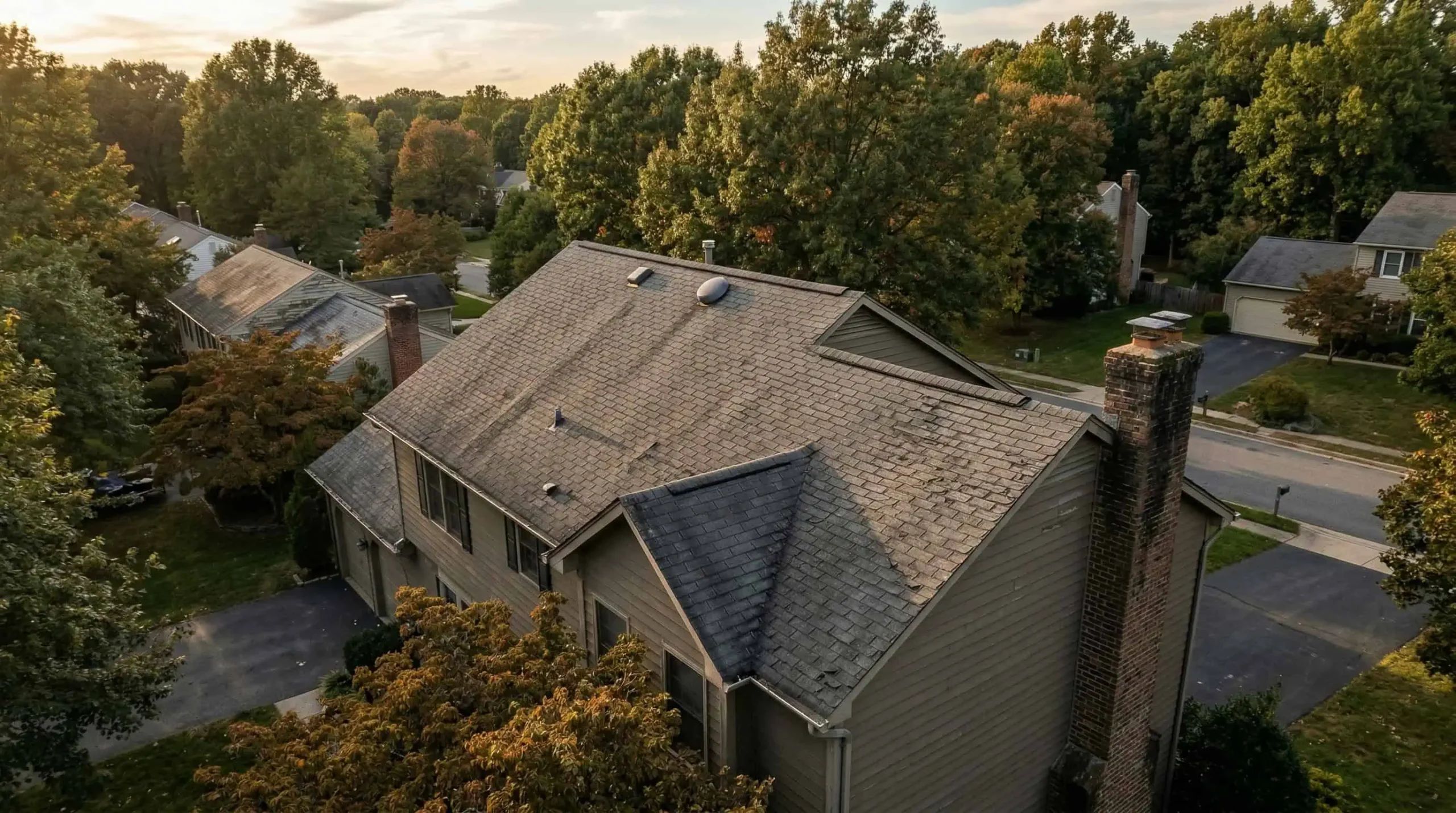
Standard 3-tab shingles are warrantied for 20–25 years under ideal conditions. Architectural shingles carry 30-year warranties. But warranties are rated for temperate climates — Northern Virginia and Maryland's combination of summer humidity, freeze-thaw cycling, and summer heat dramatically shortens actual useful life.
If you don't know your roof's age, check your home inspection report or pull the permit record from your county's building department. Most VA and MD counties have permit lookup tools online. If you bought the home without a clear record, a licensed inspector can estimate age within 2–3 years from shingle wear patterns.
Asphalt shingles are coated with ceramic granules that deflect UV radiation and give shingles their color. When those granules wash off — which they do gradually over time and rapidly under hail impact — the exposed asphalt mat underneath breaks down rapidly and can crack within 2–3 seasons.
Check your gutters and downspout discharge areas after any heavy rain. A small amount of granules is normal on new shingles (manufacturing excess). Consistent, heavy granule accumulation — especially if the granules are varied in color or you can see bare dark patches on the shingles from the ground — is an urgent warning sign.
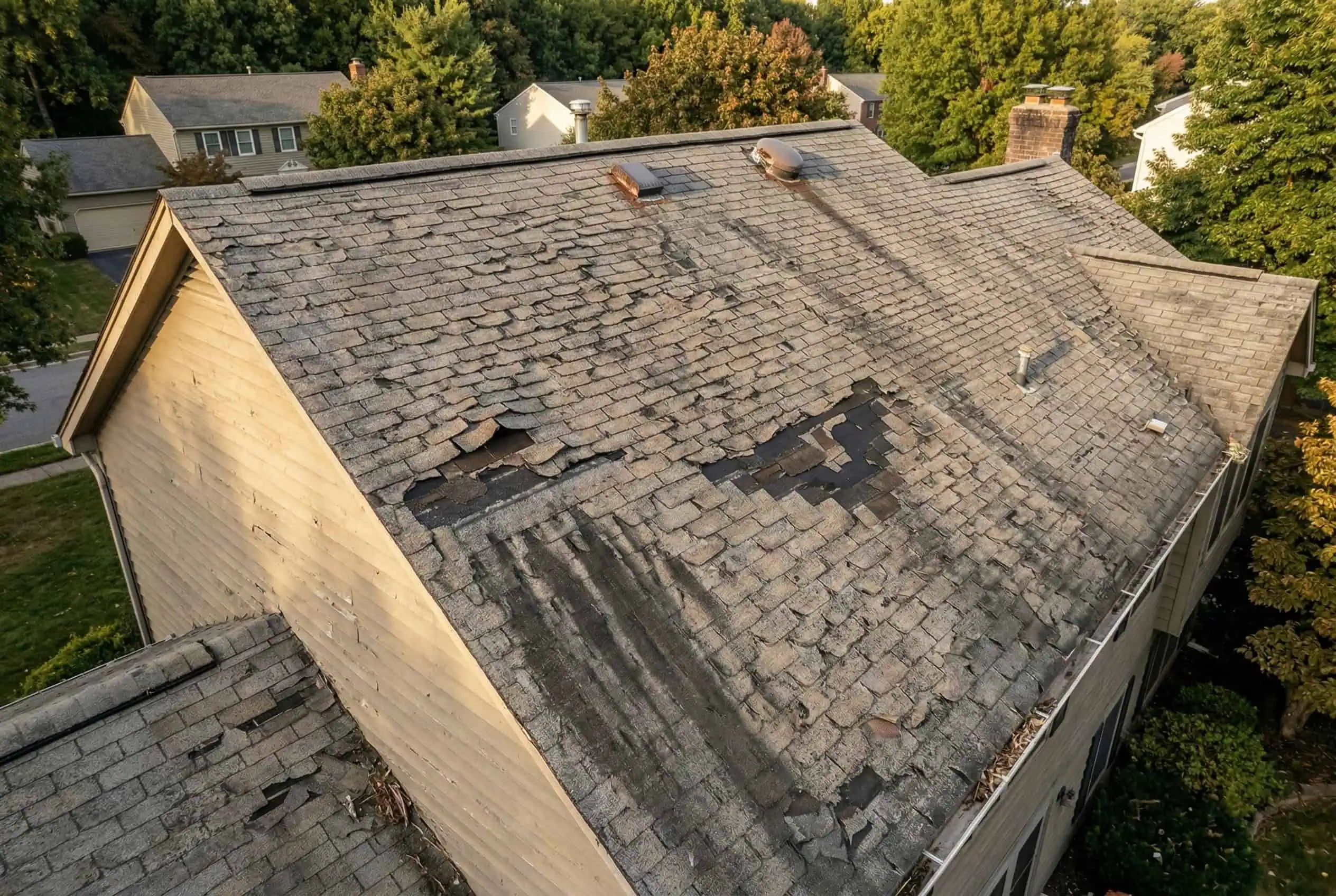
Curling (edges turning up) is caused by moisture imbalance — the bottom of the shingle absorbs moisture while the top dries out, pulling the edges upward. Cupping (center depressing) often indicates improper installation or inadequate attic ventilation causing heat and moisture to build up under the shingles.
Either condition breaks the shingle's weather seal, creates wind-catch points, and allows water to drive up under the edges in heavy rain. Curled shingles are also extremely fragile — walking on them will cause cracking and breakage. Do not attempt to inspect a roof with curling shingles yourself.
Missing shingles expose the felt underlayment — and sometimes bare OSB or plywood decking — directly to rain, UV, and freeze-thaw. Underlayment is not designed for direct exposure and will fail within one to two seasons. Once water reaches the decking, rot follows quickly and what was a shingle replacement becomes a full decking replacement.
A few missing shingles can often be patched, but only if the surrounding shingles are in good condition. If you're losing shingles regularly after storms, the fasteners or the shingle mat itself have likely reached end-of-life and patching becomes an ongoing expense rather than a solution.
On a clear day, go into your attic and turn off all lights. If you can see daylight through the roof boards, you have a breach. This is one of the most definitive signs of roof failure — any gap large enough to pass light will pass water during a driving rain or snow melt.
Check for light around ridge vents, pipe boots, chimney penetrations, and any area where two roof planes meet. Also look for dark water staining on the attic rafters or insulation, which indicates past or ongoing water intrusion even if you don't see daylight directly.
A sagging roofline — visible from the street as a dip or bow in the ridge or between rafters — indicates that the structural decking (OSB or plywood) has been compromised by long-term moisture exposure. This is beyond a shingle problem. The decking itself has rotted and will require replacement.
Soft spots you can feel when walking on the roof (or if a contractor mentions them during inspection) indicate the same issue at a smaller scale. Do not attempt to inspect a sagging roof yourself — the decking may not support weight. This is an emergency repair situation regardless of the season.
Water stains on interior ceilings — the familiar brown ring that appears after a leak — are often the first visible sign homeowners notice. The critical thing to understand is that water travels before it drips, so the stain on your ceiling may be 4–6 feet away from the actual roof penetration.
Don't assume the source is directly above the stain. A proper inspection traces water from its interior appearance point back up through the insulation and decking to find the actual entry. Temporary patching without finding the true source is one of the most common reasons homeowners end up with repeated leaks and mold issues.
Flashing is the thin metal (usually galvanized steel or aluminum) that seals the joints where your roof meets vertical surfaces — chimneys, dormers, skylights, vent pipes, and wall transitions. It is the most failure-prone component on any roof and the source of the majority of active leaks on roofs that are otherwise in acceptable condition.
Signs of flashing failure include visible rust or corrosion, gaps between the flashing and the masonry or siding it contacts, flashing that has lifted away from the surface, or caulk around the flashing that has cracked and separated. Chimney flashing in particular degrades faster than the shingles themselves due to the differential movement between the chimney and the roof structure.
Black streaking (Gloeocapsa magma algae) is a cosmetic issue that doesn't directly damage shingles — but it indicates the conditions for moss and lichen growth are present. Moss is more serious: moss roots work under shingle edges and hold moisture against the asphalt surface continuously, accelerating granule loss and degradation from below.
Algae and moss both thrive in the shaded, humid conditions common on north-facing roof sections in wooded Maryland and Virginia neighborhoods. Owens Corning Duration shingles include algae-resistant granules (StreakGuard™) — if your current shingles don't have this protection and you're in a heavily treed lot, it's worth factoring into your material choice when replacing.
Shingles in the yard after a storm means the wind peel-strength of the shingles has been exceeded — and once it happens once, it will happen again at lower wind speeds. It also means there is currently exposed decking or underlayment on your roof. Every subsequent rain event before repair adds decking moisture and mold risk.
This is also a critical moment from an insurance standpoint. Document immediately with photos and timestamps. In Virginia, you have one year from the storm date to file a claim. In Maryland, you also have a one-year window but the date of discovery (not the storm date) can be used for damage that wasn't immediately visible. Contact DreamHome for a written inspection report before calling your adjuster — it strengthens your claim significantly.
A free DreamHome inspection identifies the primary issue in under 15 minutes — with a written findings report, no sales pressure, and same-week availability across VA and MD.